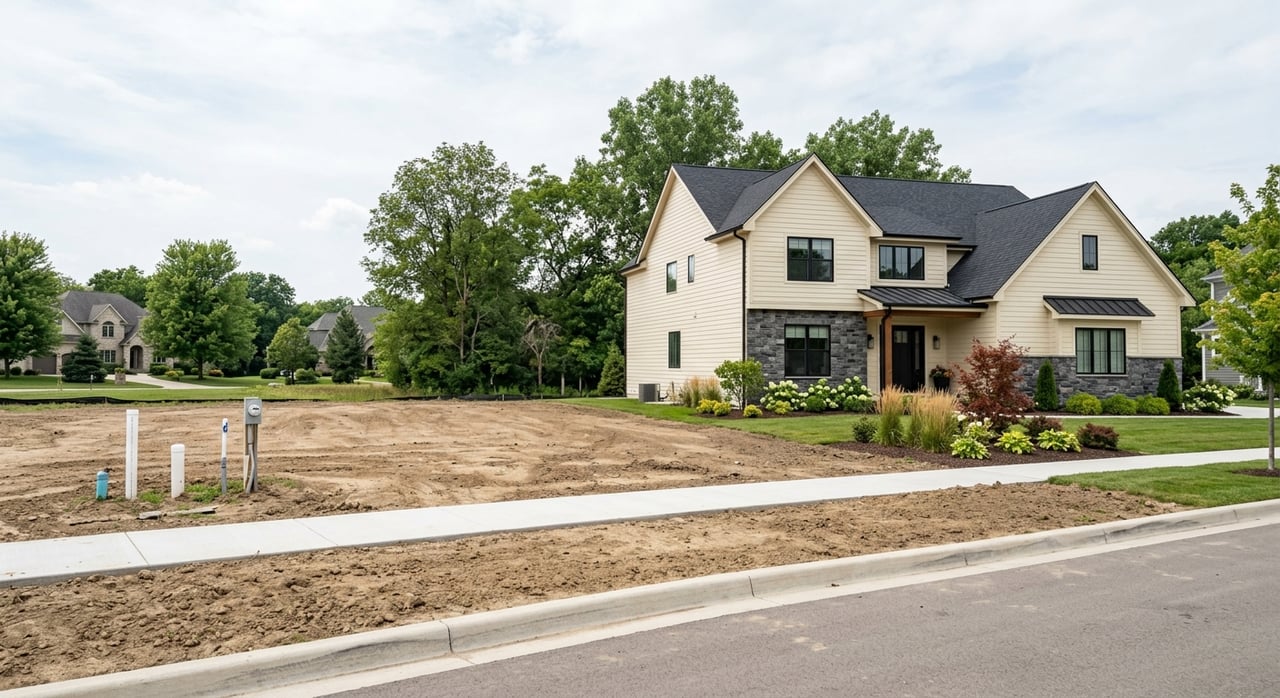
Evaluating Land And Development Opportunities In Rochester
May 21, 2026
May 21, 2026
If you are looking at land in Rochester, raw acreage tells only part of the story. A parcel can look promising on paper but become far more complex once zoning, utility access, overlays, and approval paths come into view. If you want to evaluate land or development opportunities with more confidence, this guide will help you focus on the factors that matter most in Rochester and Olmsted County. Let’s dive in.
Rochester’s growth story is shaped by long-range planning, infrastructure decisions, and steady housing demand. The city’s Unified Development Code, or UDC, is designed to implement the Comprehensive Plan while protecting public health, infrastructure, and sensitive lands.
The broader planning framework matters because it helps explain where future development may be more feasible. Rochester’s P2S 2040 plan guides how the city grows, and the Rochester Urban Service Area Land Use Plan helps local officials make land-use decisions based on projections and studies.
One important demand signal is housing. The current county housing study forecasts demand for about 18,000 new housing units from 2025 to 2035, which points to continued interest in well-located residential and mixed-density sites across Olmsted County.
Downtown remains a major focus as well. Destination Medical Center, or DMC, describes itself as Minnesota’s largest public-private economic initiative, and more than $960 million in private investment has been committed in the district since 2013.
Before you evaluate use, price, or timing, confirm which authority governs the parcel. That first step can save you time and avoid assumptions about permitting, utilities, and development standards.
Olmsted County states that its Planning Department handles zoning, building, well, and septic only in selected areas, and it does not issue building permits for property within the City of Rochester. For parcels inside Rochester, development and permitting questions go to the city’s Community Development office.
For land outside city limits, authority can vary by township and jurisdiction. That means a rural tract should be checked parcel by parcel before you assume city-style services or the same review process will apply.
In Rochester, one of the fastest early screens is the city’s zoning and development map. It shows zoning classifications, land-use-plan designations, general development plan locations, historic preservation areas, and neighborhood associations.
That map is useful, but it should not be your only step. The city also states that a zoning compliance letter is important for property sales, leases, and development, which can make it a valuable part of serious due diligence.
Rochester’s base zoning districts include:
Overlay districts can also affect what is possible on a parcel. Rochester’s overlays include airport, historic preservation, shoreland, Decorah Edge, and floodplain districts.
A parcel may be attractive because of location or size, but the real question is how it can legally and practically move from its current condition to your intended use. In Rochester, the approval path is often just as important as the land itself.
The city outlines clear subdivision and split-tract options. A lot line readjustment is for minor boundary changes between already platted lots or unplatted parcels that create no more than one additional developable lot and do not require extra right-of-way.
A Minor Land Subdivision Permit is used for a small number of new developable lots. A Major Land Subdivision Permit applies to larger new-lot creation and requires City Council approval.
If the concept does not fit current zoning, rezoning may also be required. Rochester states that rezoning requires City Council approval, which can affect project timing, carrying costs, and overall feasibility.
For larger infill or redevelopment proposals, community process can become part of the timeline. Rochester requires a Neighborhood Information Meeting for residential projects with five or more units, as well as mixed-use, commercial, or industrial development.
That meeting is not just a formality. The resulting application must report the meeting outcomes back to the city, so it is wise to understand this requirement early if you are reviewing a site for a more intensive project.
One of the smartest moves in Rochester is to engage early rather than waiting until a concept is fully designed. The city offers pre-development meetings, planner appointments, and a planning application process that can be used in earlier stages.
For buyers, sellers, and investors, this matters because it can surface practical issues before too much money or time is committed. It can also help clarify whether a parcel is best positioned for immediate development, future resale, or a longer entitlement strategy.
Infrastructure is where many land deals become either compelling or costly. In Rochester, water, sewer, and stormwater conditions can materially affect both design and budget.
The city says most of Rochester’s water comes from the Jordan Aquifer through wells that are roughly 400 to 1,000 feet deep. Rochester also requires wellhead protection plans to be reviewed every 10 years, which makes groundwater protection part of the broader development context.
Sanitary sewer is another major variable. Rochester’s system includes more than 500 miles of city-owned sewer pipe and over 12,000 city-owned structures, but capacity and extension costs are not uniform across the city.
The city’s 2020 Sanitary Sewer Master Plan identifies where capacity can limit future development and where extensions can serve undeveloped areas. Some sewersheds already have trunk lines in place, while others may require substantially more new infrastructure.
Rochester also states that it pays the initial construction of trunk sanitary sewer infrastructure into new developments, with developers reimbursing through sewer trunk rates. For a land buyer or seller, that means the sewershed and entitlement path can have a direct impact on financial performance.
Stormwater is not just a design issue. It can also affect operating costs and site planning.
Rochester says every developed property parcel in the city pays a stormwater utility fee through Rochester Public Utilities, based on parcel size, land use, and impervious area. On development land, that makes layout and coverage part of the financial conversation.
Special overlay conditions can also affect feasibility. Even though Rochester’s flood protection project reduced flood risk to 0.52% per year, the UDC still treats floodplain, shoreland, Decorah Edge, and airport areas as special overlay situations.
In established parts of Rochester, a smaller site may outperform a larger tract if it fits the city’s planning goals and has better access to streets and utilities. That is why infill should be judged by context as much as by size.
Rochester’s Comprehensive Plan calls for established neighborhoods to retain their character while allowing modest infill and redevelopment at a compatible scale. It also supports walkable, connected development patterns and a mix of housing types in appropriate locations.
That framework can make well-situated infill sites especially interesting. If a parcel aligns with surrounding development patterns and infrastructure, it may offer a more realistic path than a larger property with weak access or higher utility hurdles.
If you are evaluating land in or near downtown Rochester, city review is only part of the picture. DMC adds another planning layer that can be important for redevelopment and longer-hold strategies.
DMC’s downtown framework is organized around six sub-districts, and current priorities include Discovery Square, Heart of the City, and Transportation. Downtown Rochester also contains two designated Opportunity Zones, which may matter to investors evaluating redevelopment or longer-term holds.
DMC states that its development review process is designed to complement city planning and zoning review. For sites within the DMC Development District, that means you should evaluate the parcel through both the city and DMC lenses from the start.
If you are preparing land for market, presentation matters, but clarity matters more. A parcel with a clean, well-organized due diligence package is easier for serious buyers to evaluate.
Based on the city and county tools and review structure, a sale-ready package should usually include:
This does not guarantee approvals, but it gives buyers a clearer starting point. It also helps position the parcel based on facts instead of broad assumptions.
Most land opportunities in Rochester fall into one of a few practical categories. Defining that category early can help you match the site to the right marketing strategy and buyer pool.
This works best for parcels with clear zoning, visible utility access, and limited entitlement uncertainty. Buyers can assess value more quickly when the path is simple.
This strategy depends on whether the site fits a lot line readjustment, minor subdivision, or major subdivision path. The more a proposal changes existing lot geometry, the more important it becomes to test approvals and infrastructure early.
Strong infill sites tend to be walkable, connected, and compatible with surrounding homes or uses. In many cases, context and access matter more than raw acreage.
Some parcels are best viewed as future opportunities rather than immediate construction sites. In those cases, rezoning, subdivision, utility timing, and planning alignment may drive value more than current use.
If you are buying or selling land in Rochester, keep your review process simple and disciplined. Start with facts that can change value quickly.
Ask questions like these:
When these answers are clear, you can compare opportunities with more confidence. When they are not, the uncertainty itself may become part of the pricing and negotiation strategy.
In Rochester, successful land decisions usually come down to more than location and acreage. The strongest opportunities are often the ones where zoning, infrastructure, and approval timing align with a realistic development concept. If you want a discreet, well-managed approach to evaluating acreage, infill sites, or development parcels, Michelle Kalina can help you assess the path forward with clarity and white-glove guidance.
Stay up to date on the latest real estate trends.

Whether you're purchasing your dream home or selling a prized property, Michelle offers strategic insight, elevated marketing, and results-driven representation. She blends local expertise with national reach and a global perspective — always thinking creatively, advocating fiercely, and treating every client like family.