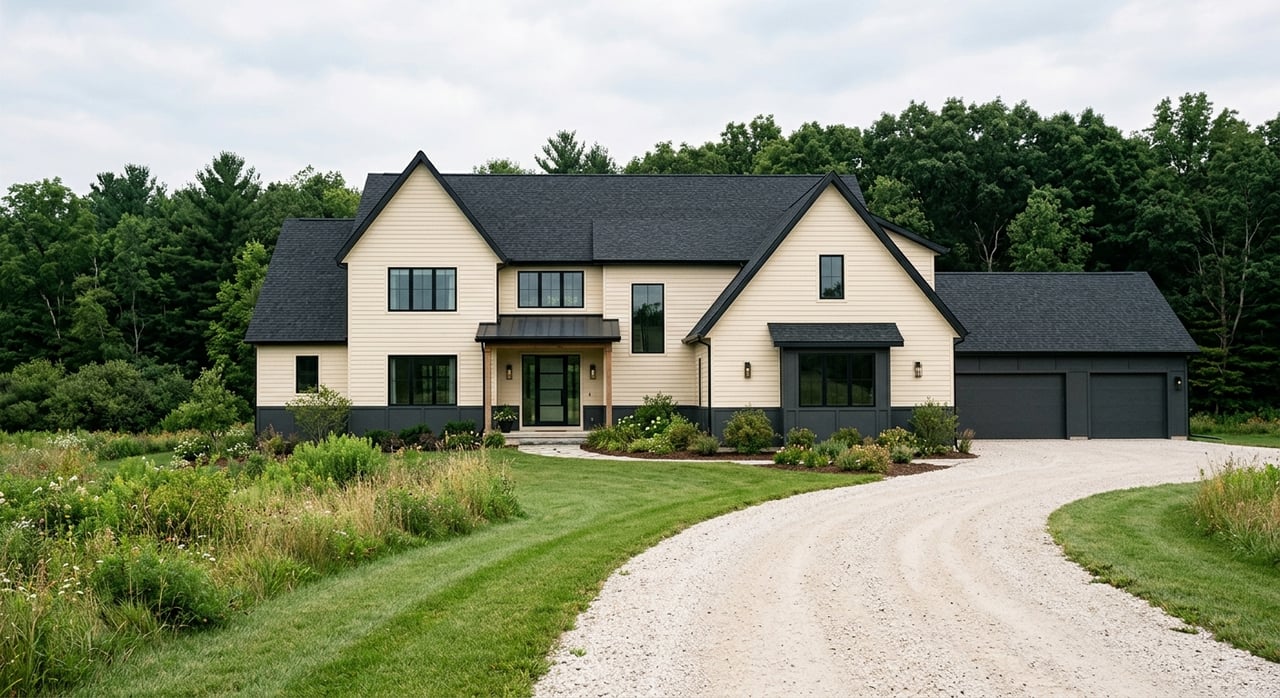
Planning A Custom Home On Acreage In The Rochester Area
July 23, 2026
July 23, 2026
Are you dreaming about a custom home with more space, longer views, and room to build around the way you actually live? If you are looking at acreage near Rochester, Minnesota, it is easy to focus on the setting first and the paperwork second. In reality, the land itself often determines what you can build, how much it will cost, and how smooth the process will feel. This guide walks you through the practical side of planning a custom home on acreage in the Rochester area so you can make smarter decisions before you buy. Let’s dive in.
A beautiful floor plan does not guarantee a buildable project. In the Rochester area, acreage sites are highly parcel-specific, and approvals can vary based on whether the property falls under Rochester, Olmsted County, or a township.
Olmsted County notes that building permits, zoning, well and septic oversight, and subdivision administration can differ by jurisdiction. Rochester also requires pre-development meetings before most land development applications, which makes early planning especially important if you are considering a split, a new lot, or a more complex site.
One of the first questions to answer is simple: who regulates the parcel? That answer affects zoning, land division, utility planning, and the permit path.
Within Rochester city limits, the AG district is intended for large-lot rural residential and agricultural uses in annexed undeveloped areas, and the minimum lot area is 35 acres. For many smaller acreage opportunities near Rochester, township or county regulation may be more practical than city AG zoning.
If the project involves creating a new lot, the review process can also change. Rochester uses major land subdivision approval through City Council and minor land subdivision approval through City Teammate review, while county processes distinguish between metes and bounds and formal plats or subdivisions.
Acreage projects often require more than a standard building permit. Olmsted County structures development review around a land development application, and depending on the project, you may also need supporting items such as:
That list is a good reminder that land due diligence should happen before you commit to a parcel. A quick drive-by or aerial view cannot tell you whether a site will move smoothly through review.
When you tour acreage, it helps to look beyond views and tree lines. Olmsted County’s zoning certificate materials show the level of detail that often matters in real-world planning.
A serious due diligence review may need to account for the survey, lot corners, easements, adjacent access streets, structure locations, parking and driveways, contours, utilities, trees, cut-and-fill areas, and stormwater or erosion-control details. Those factors influence privacy, grading cost, driveway layout, drainage, and where future outbuildings may fit.
In other words, the best acreage parcel is not always the one that looks most dramatic online. It is often the one that can be built on efficiently and predictably.
The way a home sits on the land can affect comfort, natural light, and long-term efficiency. According to U.S. Department of Energy passive-solar guidance, windows should generally face within 30 degrees of true south, and winter sun should not be shaded from 9 a.m. to 3 p.m.
South-facing roofs with roughly 15 to 40 degrees of slope are generally favorable for solar readiness. North- and south-facing windows are usually easier to manage for daylighting, while east- and west-facing glass can be harder to control for glare and heat gain.
For acreage homes, this matters because you often have more flexibility to position the structure intentionally. If you can align the house to the site early, you may improve light, views, and energy performance at the same time.
Not every attractive parcel is equally straightforward to build on. In the Rochester area, environmental and land-feature constraints can trigger additional review.
Rochester’s development applications require extra environmental review if a site includes wetlands, Decorah Edge support areas, mapped FEMA floodplain, shoreland, or steep slopes. Across Olmsted County, development in floodplain or shoreland areas requires a Floodplain/Shoreland Development Permit.
These conditions do not automatically stop a project, but they can affect siting, timelines, engineering, and cost. That is why early investigation matters so much with acreage.
Driveway access is easy to overlook until it becomes a problem. If your parcel fronts a county highway, Olmsted County requires access permits for new driveway construction and for certain changes to driveway access.
The county’s access ordinance says the goal is generally one access per parcel where safe, based on factors such as sight distance and driveway spacing. Utility work in county right of way also requires a permit, which can become an important detail if you are planning service extensions.
A parcel with easy, safe access may be far simpler to develop than one that looks appealing but has visibility or spacing challenges. On acreage, that difference can shape both cost and design.
Utility planning should be part of site selection, not a last-minute item. In Rochester, the city sanitary sewer system serves homes and businesses throughout the city, but property owners are responsible for the sewer service from their property to the main and need a connection permit for that work.
The city also ties sewer trunk rates to the cost of extending infrastructure into undeveloped areas. That helps explain why utility proximity can strongly influence land value.
Outside city sewer and water service, Olmsted County becomes the key regulator. The county requires permits for new well construction and administers septic systems under local chapter requirements and Minnesota rules.
If a lot is not served by public water or public sewers, the zoning certificate application must include approval from the county environmental specialist for the proposed water supply and sewage disposal method. For buyers, this is a major reason to verify well and septic feasibility before purchasing land.
In the Rochester market, land value is about more than size alone. Olmsted County’s 2025 housing study found the average single-family lot size across the county was 0.68 acres, rising to 1.83 acres in the Rochester Fringe.
The same study noted that lot prices vary considerably based on location, acreage, views, and topography. It also found that more than three-quarters of active single-family subdivisions in the county market area were in Rochester and Rochester Fringe.
That points to a clear takeaway for custom-home buyers: a large parcel is not automatically a premium parcel. The real value tends to come from usable land, practical access, manageable site work, and a home plan that responds thoughtfully to the setting.
Acreage homes tend to feel strongest when the architecture fits the land. Rochester’s historical context report shows that local housing styles have followed broader national trends, including Craftsman, Prairie, Colonial Revival, Period Revival, Minimal Traditional, Cape Cod, and Ranch.
Custom-build examples in the market also reflect modern, contemporary, country, and craftsman directions. On acreage, these styles can work well because they often adapt to longer views, detached garages or shops, and simple massing that supports efficient siting.
The right design choice is not just about appearance. It is also about how the home meets the grade, captures natural light, supports privacy, and leaves enough usable land for the way you want to live.
If you are serious about building on acreage, assemble your team early. Rochester and Olmsted County application checklists show why these projects often need a survey, site plan, utility plan, elevations, stormwater and erosion-control information, and sometimes zoning or subdivision approvals.
A practical pre-purchase team may include:
Rochester also notes that residential building contractors must be licensed with the State of Minnesota. Bringing the right professionals in early can help you spot red flags before they become expensive surprises.
If you want a smoother experience, it helps to follow a clear order of operations.
This sequence can save time, protect your budget, and help you avoid buying a parcel that does not support your goals.
Planning a custom home on acreage is part real estate search and part project strategy. You are not just buying land. You are evaluating entitlement risk, utility realities, design potential, and long-term value.
That is where local guidance matters. With the right planning approach, you can identify parcels that offer both lifestyle appeal and practical buildability, which is often the combination that creates the strongest result.
If you are exploring acreage, custom new construction, or development land in the Rochester area, Michelle Kalina offers a discreet, white-glove approach built around clear communication, local market knowledge, and thoughtful planning from the start.
Stay up to date on the latest real estate trends.
Whether you're purchasing your dream home or selling a prized property, Michelle offers strategic insight, elevated marketing, and results-driven representation. She blends local expertise with national reach and a global perspective — always thinking creatively, advocating fiercely, and treating every client like family.